
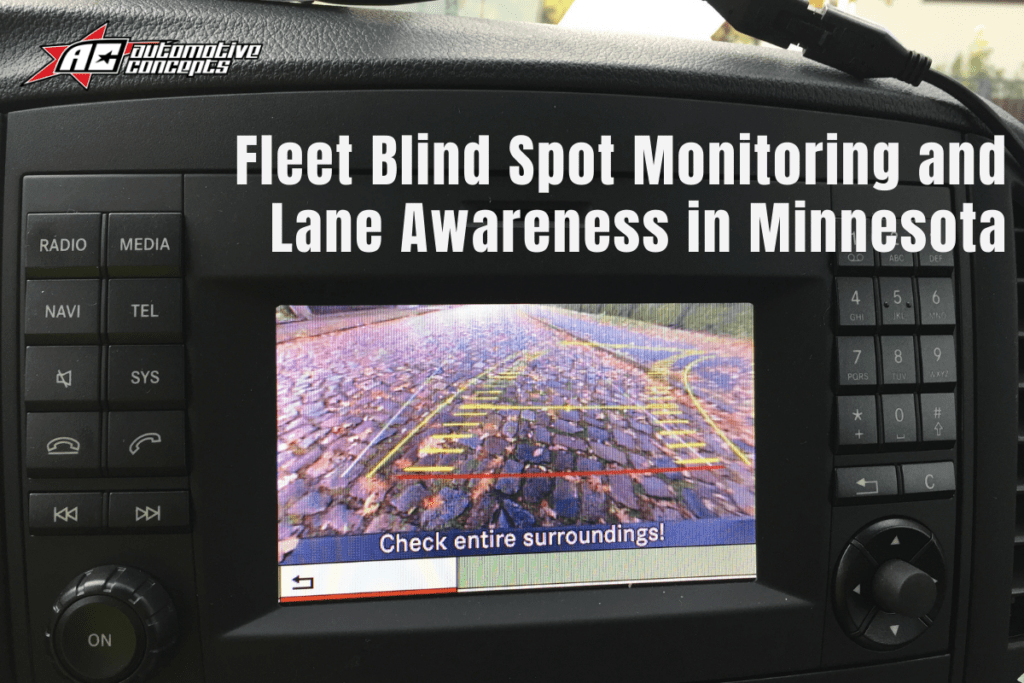
Reduce Risk, Improve Driver Confidence, and Support Fleet Compliance
Modern fleet vehicles operate in increasingly complex environmentsdense traffic, congested urban corridors, high-speed highways, and tight job sites. Fleet blind spot monitoring (BSM) and lane awareness systems are designed to reduce preventable incidents, improve driver awareness, and help fleet managers control risk across their operations.
At Automotive Concepts, we install fleet-grade blind spot monitoring and lane departure warning systems for Minnesota businesses that depend on safe, reliable vehicles. These systems are engineered to support professional drivers, reduce side-swipe accidents, and strengthen compliance with internal safety programs and insurance expectations.
Service Overview: Eliminating Blind Spots, Enhancing Driver Awareness
Blind spot monitoring (BSM) and lane departure warning systems (LDWS) are advanced driver assistance technologies that actively alert drivers to potential hazards they may not see.
- Blind Spot Monitoring (BSM): Uses sensors or cameras to detect vehicles in adjacent lanes and blind spots, providing visual or audible alerts during lane changes or merges.
- Lane Departure Warning Systems (LDWS): Monitor lane markings and notify drivers when a vehicle drifts out of its lane without signaling.
In real-world fleet operations, these systems are especially valuable during:
- Highway driving and long-distance routes
- Lane changes in congested traffic
- Merging onto freeways or construction zones
- Urban driving with cyclists, pedestrians, and smaller vehicles
Blind-spot and lane-awareness systems are ideal for delivery vans, service trucks, utility vehicles, municipal fleets, and high-mileage drivers, including aging or less-experienced operators who benefit from enhanced situational awareness.
Automotive Concepts is a Minnesota-based certified restyler and commercial upfitter with decades of experience integrating driver assistance systems into fleet vehicles of all sizes.
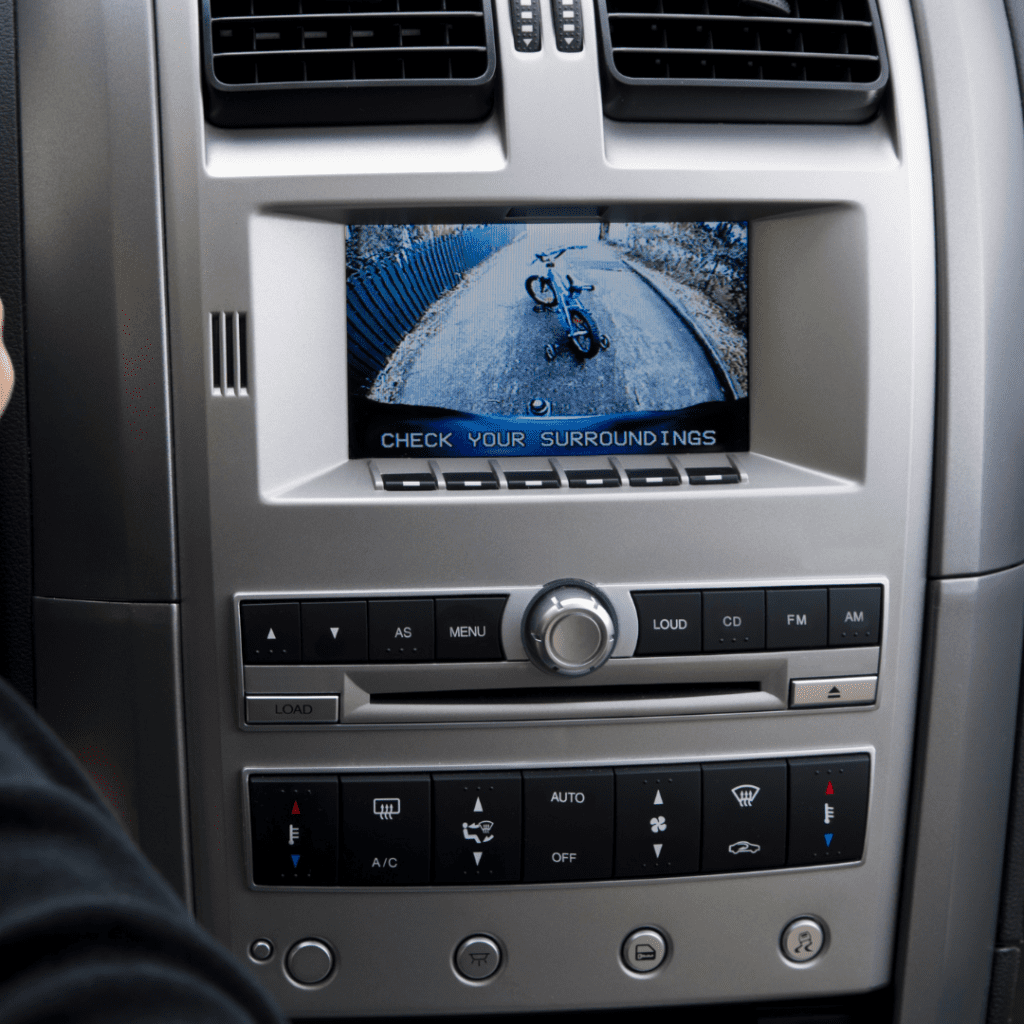
Benefits for Fleet Safety and Operations
Fleet managers adopt blind-spot and lane-awareness systems because they deliver measurable safety and operational improvements.
Reduce Side-Swipe Accidents and Unsafe Merges
Side-impact collisions are among the most common and costly fleet incidents. BSM systems provide real-time alerts that help drivers avoid lane-change and merge-related accidents.
Increase Driver Alertness and Confidence
Drivers operating larger or modified vehicles often struggle with visibility. Lane awareness and blind-spot alerts help drivers stay focused, reduce stress, and make safer decisions in high-traffic situations.
Improve Insurance Eligibility and Reduce Liability Exposure
Many insurers and safety programs view ADAS technologies as positive risk-mitigation tools. Installing these systems can support insurance discussions, claims defense, and safety audits.
Protect Pedestrians, Cyclists, and Smaller Vehicles
Urban routes and job sites create risks beyond other vehicles. Blind spot monitoring helps drivers detect vulnerable road users that are easily missed in mirrors alone.
Support Driver Training and Safer Habits
Alerts reinforce proper lane discipline and situational awareness, complementing driver coaching programs and ongoing safety initiatives.
Achieve ROI Through Reduced Downtime and Repairs
Fewer accidents mean less time off the road, fewer body repairs, and lower indirect costs tied to vehicle downtime.
How Blind Spot and Lane Systems Are Installed
Our fleet installation process is designed for consistency, reliability, and minimal disruption.
Fleet Intake and Consultation
We begin with a detailed consultation to understand vehicle types, routes, driver behavior, and compliance requirements. Each vehicle is reviewed to ensure proper system selection.
Sensor and Module Placement
Sensors and cameras are positioned based on vehicle size, body configuration, and driving patterns to ensure accurate detection and minimal false alerts.
Electrical and Interface Integration
Systems are integrated with visual indicators, audible alerts, or in-cabin displays using OEM-style wiring practices to maintain reliability and serviceability.
Calibration, Testing, and Validation
Every system is calibrated and tested to confirm detection accuracy, alert timing, and optimal performance across real driving conditions.
Driver Training Support and Documentation
We provide walkthroughs for drivers and managers, along with documentation that supports internal safety records and compliance reporting.
All installations are performed in-house by ASE-certified technicians never outsourced.
Why Choose Automotive Concepts for ADAS Installation
Fleet managers across Minnesota choose Automotive Concepts because we understand both vehicle technology and fleet operations.
- Over 35 years serving Minnesota businesses
- 12,000+ vehicles outfitted annually, including commercial and municipal fleets
- ASE-certified installers and SEMA member organization
- In-house installation with no outsourcing
- Scalable solutions for small fleets and enterprise operations
- Long-term service partnerships and warranty-backed work
We don’t just install systems we help fleets build safer, more reliable operations.
Client Testimonials and Proof in Action
Fleet customers consistently report improved confidence and reduced incidents after installing blind spot and lane awareness systems.

Case studies often show reductions in side-impact incidents, smoother driver onboarding, and stronger safety program adoption.
FAQs for Fleet Blind Spot and Lane Monitoring
Can these systems work on older or custom-built vehicles?
Yes. Many fleet-grade systems are designed specifically for aftermarket installation on older or upfitted vehicles.
Are systems reliable in winter conditions?
Fleet systems are built with weather-resistant components suitable for snow, rain, and low-visibility environments.
What’s the difference between camera-based and radar-based systems?
Radar systems excel at detection regardless of lighting, while camera systems provide visual context. We recommend based on use case.
How much driver training is required?
Minimal. Most drivers adapt quickly with a short walkthrough and clear alert explanations.
Are bundle packages available?
Yes. Blind spot and lane systems are often bundled with dash cams, GPS, and parking sensors.
FAQs for Fleet Blind Spot and Lane Monitoring (version 2)
Can these systems work on older or custom-built fleet vehicles?
Yes. Many fleet-grade blind spot monitoring and lane awareness systems are designed specifically for aftermarket installation. Automotive Concepts regularly installs these systems on older vehicles, upfitted service trucks, utility bodies, vans, and specialty commercial platforms that were not factory-equipped with driver assistance technology.
Each vehicle is evaluated individually to ensure proper sensor placement, calibration, and reliable performance.
Are blind spot and lane systems reliable in Minnesota winter conditions?
Yes. The systems we install use weather-resistant sensors and components designed for year-round commercial use, including snow, rain, road spray, and low-visibility conditions.
As with any external sensors or cameras, occasional cleaning may be required. Dirt, road salt, snow, or debris buildup can temporarily affect sensor performance, which is why routine vehicle inspections are recommended as part of fleet maintenance best practices.
What types of alerts do blind spot and lane awareness systems provide?
Fleet blind spot and lane awareness systems typically provide visual alerts, audible alerts, or a combination of both, depending on the system and configuration.
Common alert types include:
- Visual indicators, such as amber warning lights mounted on mirrors or A-pillars
- Audible alerts inside the cab when a vehicle is detected or a lane departure occurs
- Combined visual and audio alerts for higher-risk situations
Alert behavior can often be configured to align with fleet safety preferences and driver needs.
What’s the difference between camera-based, radar-based, and sensor-based systems?
Different technologies serve different fleet use cases:
- Radar- or sensor-based systems are highly effective for blind spot detection and perform consistently regardless of lighting conditions.
- Camera-based systems provide visual context and are commonly used for lane awareness and lane departure warning.
- Hybrid systems may combine multiple technologies to enhance coverage and accuracy.
Automotive Concepts recommends systems based on vehicle type, duty cycle, driving environment, and driver behavior, rather than a one-size-fits-all solution.
How much driver training is required?
Minimal. Most drivers adapt quickly after a brief walkthrough explaining:
- What triggers alerts
- How to interpret visual and audio warnings
- When alerts are informational versus cautionary
These systems are designed to support driver awareness, not replace driver control.
Are bundle packages available with other fleet safety systems?
Yes. Blind spot monitoring and lane awareness systems are often bundled with:
- Dash cameras for incident documentation
- Back-up and multi-camera systems
- Parking sensors
- GPS and telematics platforms
Bundling allows fleets to build a layered safety strategy while simplifying installation, pricing, and long-term support.
Service Areas Across Minnesota
Automotive Concepts serves fleet customers throughout Minnesota, including:
- Minneapolis
- St. Paul
- Duluth
- Eden Prairie
- Greater Twin Cities metro
We support multi-vehicle scheduling, dealership coordination, and municipal fleet partnerships, with flexible drop-off or on-site options for larger fleets.
Call to Action: Safer Fleets Start with Smarter Systems
Blind spot monitoring and lane awareness systems help fleets reduce risk, improve driver confidence, and strengthen compliancewithout sacrificing efficiency.
Talk to Our ADAS Experts Today
Protect your drivers, your vehicles, and your bottom line with fleet-grade safety technology from Automotive Concepts.